Dongguan Aier Eye Hospital: One City, Three Hospitals and One Clinic, Part of a Global Network
 0769-22660023 0769-22660023
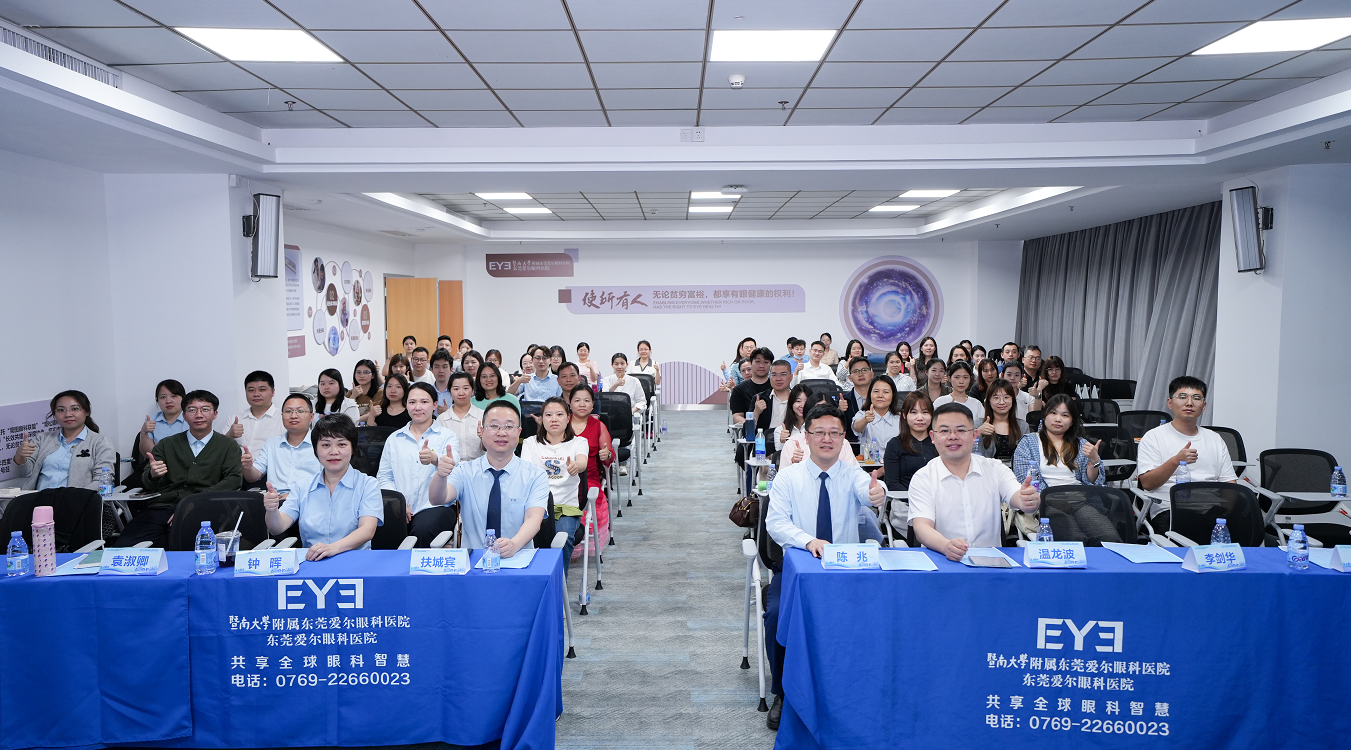
Recently, the 2025 Guangdong Continuing Medical Education Program—the Greater Bay Area Refractive Forum and Training Course on New Advances in Personalized Corneal Laser Refractive Surgery and Laser-Assisted In Situ Keratomileusis (LASIK) Design Guided by Optical Pathway Tracking—concluded at Dongguan Aier Eye Hospital. The event was hosted by the Guangdong Eye Health Association and co-organized by its Refractive Surgery Branch and Dongguan Aier Eye Hospital Affiliated to Jinan University.
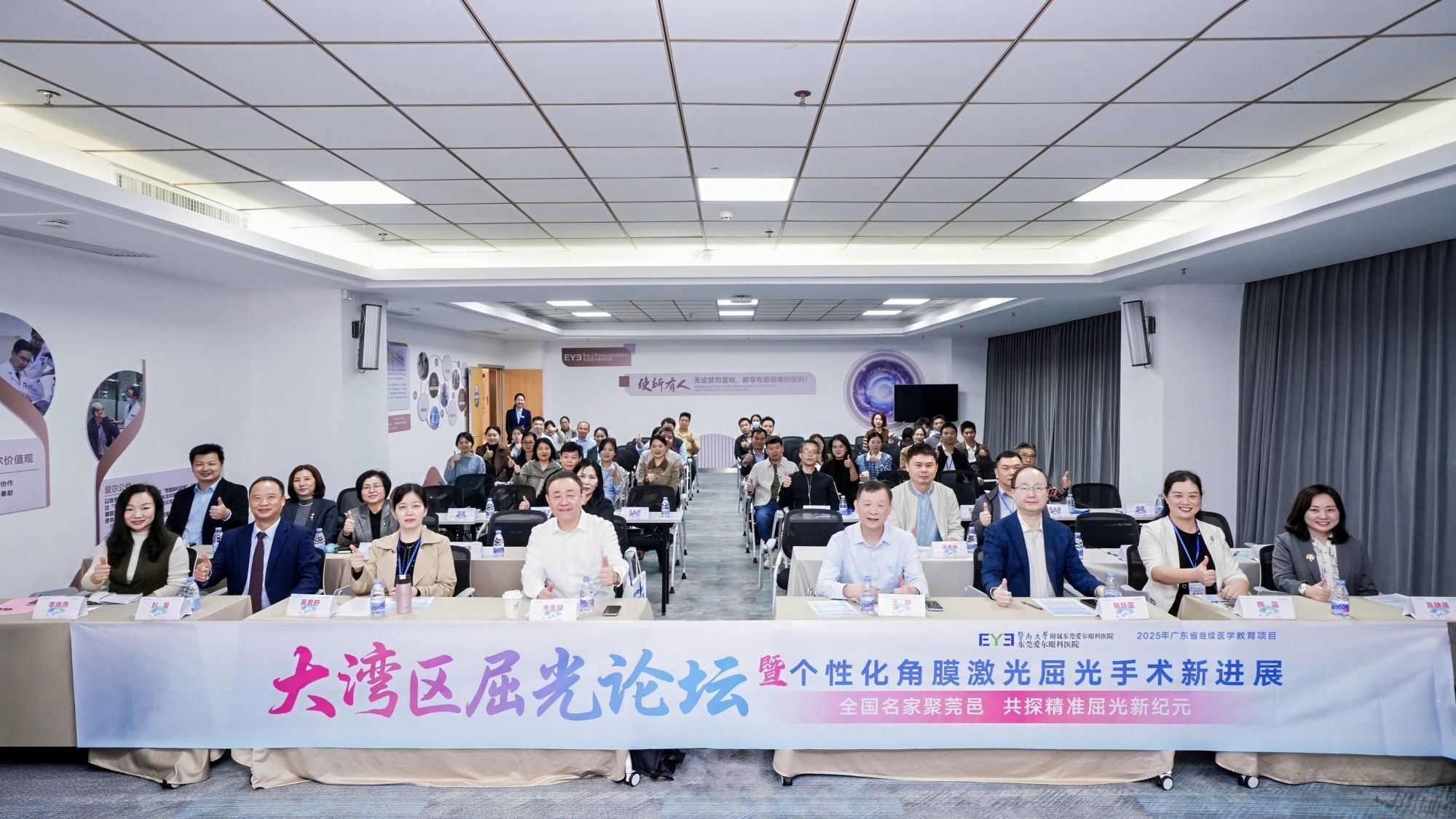
The forum gathered top experts in China's refractive field. The Media Lounge invited these leading specialists for in-depth interviews, where they shared profound insights on core topics including full-wavefront technology innovation, personalized surgical development, and new refractive applications, charting the course for China's refractive surgery industry.
The following is excerpted from the Southern Metropolis Daily report:
Refractive Surgery Enters a New Era of Personalization
Leading Experts Discuss Technological Breakthroughs and Industry Future
Chen Yueguo: All-Wavefront Customized Surgery Elevates Visual Quality to New Dimensions
As an authoritative expert in corneal refractive surgery, Professor Chen Yueguo highlighted the industry transformation brought by All-Wavefront technology in his exclusive interview. He emphasized that this latest advancement in excimer laser ablation technology continues the core logic of over 30 years of iterative development in China's refractive surgery, achieving a pivotal leap from “correcting vision” to “optimizing visual experience.” “While traditional surgeries can achieve uncorrected visual acuity above 5.0, patients often face persistent issues like nighttime double vision, glare, and reading fatigue. Full-wavefront technology precisely addresses these pain points.”
Professor Chen Yueguo further elaborated that the core advantage of Full-Wavefront Technology lies in its “personalized customization.” Through a three-in-one diagnostic system, it comprehensively collects key data including corneal topography, total ocular aberrations, and axial length to establish a unique 3D model for each eye, thereby tailoring a bespoke surgical plan. This precision-driven treatment model not only enhances postoperative uncorrected visual acuity but also significantly optimizes all-day visual experience.
Discussing the technology's industry-wide impact, Chen Yue Guo highlighted the immense potential of China's refractive surgery market: "China has over 700 million myopia patients, yet refractive surgery penetration remains extremely low—less than one in every thousand patients undergoes the procedure. The clear vision and convenient experience offered by Full-Light Technology are expected to attract more patients reliant on glasses or contact lenses to choose surgical correction. This will drive China's refractive surgery penetration rate toward developed-country levels and propel the industry toward high-quality development centered on ‘optimal patient experience.’"
Mishengjian: Personalized Technology Benefits Both Doctors and Patients; Greater Bay Area Leads Industry Innovation
Visiting Dongguan for the first time, Professor Mi Shengjian was deeply impressed by the Greater Bay Area's innovative vitality. “As the forefront of China's reform and opening-up, the Greater Bay Area boasts advanced industrial foundations and leading technological capabilities, providing fertile ground for the clinical translation of refractive surgery technologies.” He believes the forum's “free-thinking and inclusive” nature effectively promotes the practical application of new equipment, technologies, and concepts, ultimately benefiting both doctors and patients.
Reflecting on three decades of industry development, Professor Mi defined “minimally invasive and personalized” as the core pursuit of the medical community, with Full-Light Sculpting representing a groundbreaking achievement in this quest. “By tailoring surgical plans for each eye, this technology not only delivers excellent vision but also ensures superior visual quality around the clock, truly ushering refractive surgery into the era of personalization.”
Wang Zheng: Building Industry Foundations with Personalization at the Core
As the forum's chairperson, Professor Wang Zheng outlined the development path for personalized refractive surgery from an industry-wide perspective. He noted that in recent years, new surgical platforms like Full-Wavefront have achieved significant breakthroughs in theoretical research and measurement technology, making the concept of personalization increasingly mainstream. “The value of new medical technologies lies not only in their inherent advancement but also in physicians' deep understanding and standardized application of these techniques. Therefore, physician education is paramount.”
Addressing the current issue of mixed-quality refractive surgery information on social media, Professor Wang Zheng emphasized the public education mission of academic platforms: “It is our unshirkable responsibility to convey accurate surgical knowledge to patients through professional channels like forums, helping them develop a scientific understanding of refractive surgery.” In his view, deepening the personalized approach requires dual progress in both optometric theory and surgical techniques. “As our understanding of unknown factors in refractive science continues to advance, the personalized concept will have even broader development prospects.”
The perspectives of the three experts converged on the industry's developmental direction: “personalization, high quality, and standardization.” The Greater Bay Area Refractive Forum not only established a platform for exchanging cutting-edge technologies but also, through the collision of expert wisdom, injected powerful momentum into the healthy development of China's refractive surgery industry. This progress holds promise for more myopic patients to achieve superior visual experiences through technological innovation.
Liu Fei: Dual Navigation Technology Enhances ICL Surgery Quality, Empowering Ophthalmology Advancement in the Greater Bay Area
Regarding the strategic significance of hosting the forum in Dongguan, Liu Fei, representative of the organizing committee, stated: “Positioned at the core hub of the Greater Bay Area, Dongguan has broken down geographical barriers by gathering the nation's top refractive treatment resources here. The core objective is to comprehensively elevate the regional standard of myopia surgery through technical discussions and hands-on training.” Leveraging this platform, the standardized clinical application of cutting-edge technologies is accelerating in Dongguan and surrounding cities."
As a focal topic of the forum, the innovative value of dual navigation technology took center stage. President Liu Fei highlighted the breakthrough advantages of its core equipment—the Zeiss ARTEVO 800 3D Digital Navigation Microscope—in intraocular surgeries like ICL lens implantation: " This device achieves a dual breakthrough of ‘low illumination + high definition,’ reducing surgical light intensity by 85% while enhancing imaging clarity by 25%. This advances the overall quality of ICL surgery, delivering patients a more precise, intelligent, safe, and comfortable treatment experience alongside superior postoperative visual outcomes. It directly overcomes the visual field limitations in high-difficulty surgeries. Surgeries previously unfeasible due to poor corneal conditions or corneal opacities causing blurred vision can now be safely performed with high-definition visualization. This effectively prevents complications such as worsening cataracts and increased surgical risks caused by delayed treatment.
According to reports, Dongguan Aier Eye Hospital is currently the only medical institution in Dongguan offering dual navigation technology. This technology establishes a comprehensive safety barrier through “astigmatism navigation + OCT navigation”: Astigmatism navigation significantly enhances the precision of astigmatism correction during ICL and cataract surgeries, while OCT navigation enables real-time monitoring of critical intraoperative indicators such as corneal endothelium and anterior chamber angle status, even providing clear visualization of the retinal macular region. “The implementation of this technology has yielded tangible results. It not only significantly improves the precision of intraocular lens implantation and reduces the risk of secondary surgery, but also enables synchronized 3D high-definition visualization between the lead surgeon and assistant, effectively shortening the learning curve for junior doctors,” Liu Fei added.
Chen Xiaobei: 10-Second Robot-Assisted SMILE Emerges as “New Favorite for Vision Correction” as Metropolis Benefits from Technological Advancements
In early July this year, Dongguan Aier Eye Hospital pioneered the introduction of Dongguan's first next-generation VISUMAX 800 robotic SMILE system, successfully performing the nation's first batch and Dongguan's inaugural robotic SMILE pro procedures. In an exclusive interview, Chen Xiaobei, Director of the Refractive Surgery Department at Dongguan Aier Eye Hospital, shared insights on the iterative advancements of SMILE technology. She emphasized that the core appeal of SMILE surgery lies in its 2mm micro-incision—a significant advancement over the 22mm incision of previous SMILE procedures. This truly embodies the minimally invasive philosophy of corneal laser surgery, making it the preferred solution for countless myopia patients.
Regarding the remarkable achievement of the new-generation robotic SMILE pro surpassing 30,000 cases domestically, Chen Xiaobei highlighted key technological advancements through a comparison of old and new equipment: “While the previous VISUMAX 500 device pioneered the minimally invasive era, its 23-second scanning time demanded extremely high patient cooperation. Central positioning relied heavily on the surgeon's experience and patient compliance, making errors more likely.” The new SMILE pro achieves three core breakthroughs: single-eye scan time reduced from 23 seconds to under 10 seconds; enhanced robotic arm intelligence; and new center positioning compensation with eye rotation tracking. This precisely corrects differences in eye rotation between sitting and lying positions, enabling patients with high astigmatism to benefit from SMILE technology.
“The core breakthrough in achieving vision correction in 10 seconds lies in increasing the laser scanning frequency from 500 Hz to 2 MHz,” " explains Chen Xiaobei. This accelerated scanning not only reduces patient cooperation challenges but also ensures smoother scanning of the corneal stromal lens, significantly improving visual quality and clarity on the first postoperative day.
As the first hospital in Dongguan to introduce this technology, Chen Xiaobei notes that this decision precisely aligns with Dongguan's distinct demographic profile—a population exceeding ten million with a high proportion of young adults aged 18-45, driving strong demand for refractive surgery. Leveraging the hospital's 11 years of refractive surgery expertise, over 30,000 femtosecond laser procedures, and the global resources of the Aier Eye Hospital Group, Dongguan Aier has consistently pursued the goal of building a “comprehensive refractive surgery solution,” localizing cutting-edge international technologies.
She highlighted that since performing Dongguan's first ICL surgery in 2015, Dongguan Aier Eye Hospital has pioneered diverse systems including minimally invasive SMILE, personalized LASIK, and precision-guided ICL procedures. The hospital continues to lead regional refractive technology innovation, driving the city's refractive surgery industry toward greater precision, safety, and personalization.

咨询电话:
0769-22660023
医院地址:
东莞市东城区莞樟路石井路段171号-东莞爱尔眼科医院