Dongguan Aier Eye Hospital: One City, Three Hospitals and One Clinic, Part of a Global Network
 0769-22660023 0769-22660023
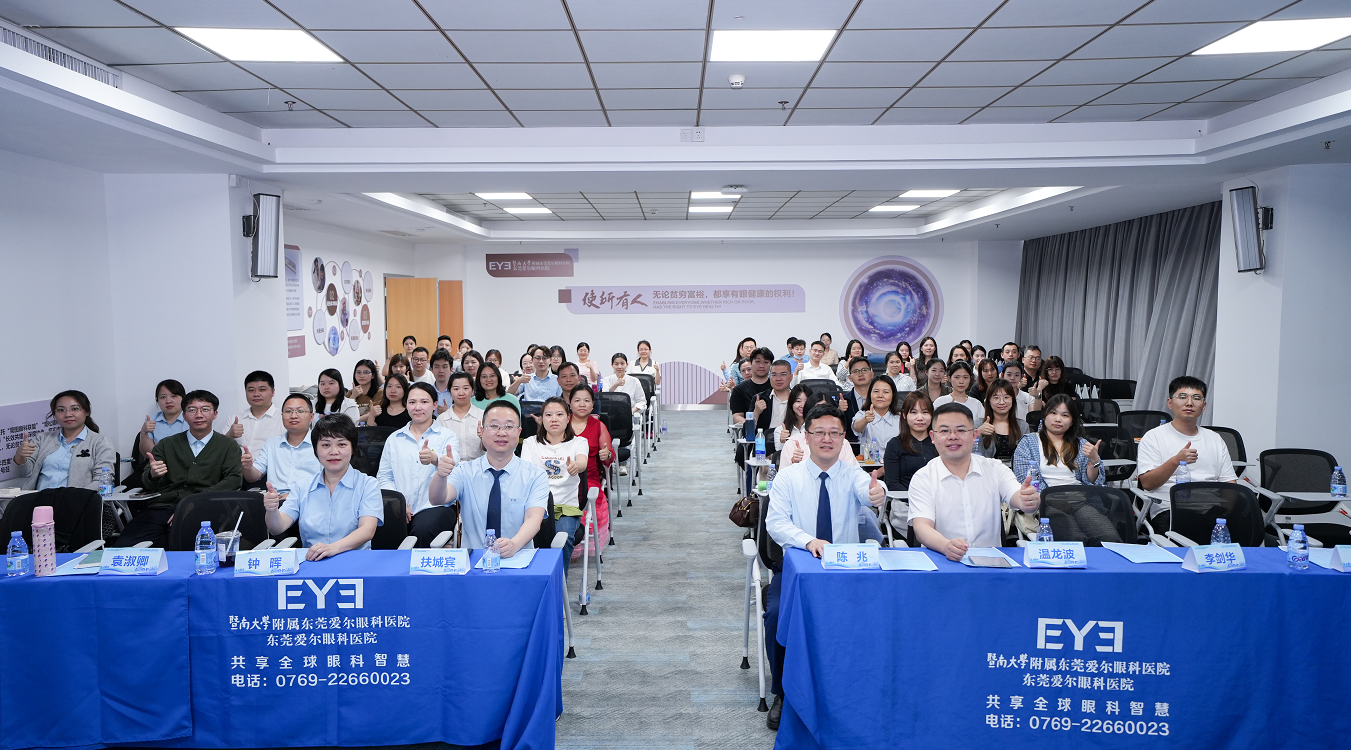
On December 13, the 2025 Guangdong Continuing Medical Education Project—the Greater Bay Area Refractive Forum and Training Course on New Advances in Personalized Corneal Laser Refractive Surgery and Laser-Assisted In Situ Keratomileusis (LASIK) Design Guided by Light Path Tracking—was grandly held at Dongguan Aier Eye Hospital. The event was hosted by the Guangdong Eye Health Association and co-organized by the Refractive Surgery Branch of the Guangdong Eye Health Association and Dongguan Aier Eye Hospital Affiliated to Jinan University.
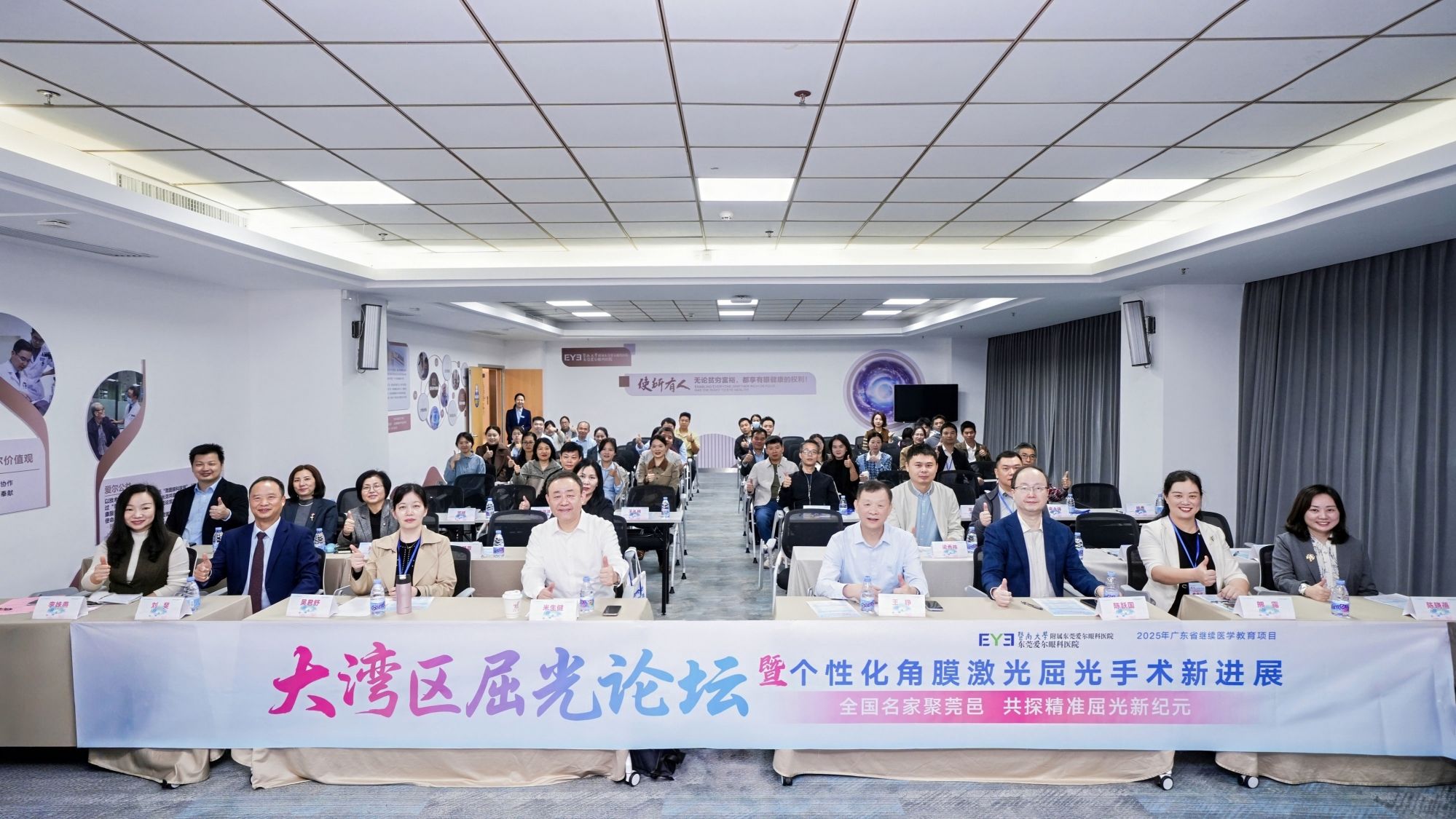
The forum gathered numerous renowned experts in refractive surgery. Leading domestic figures including Professor Wang Zheng, Chief Medical Officer of Aier Eye Hospital Group Guangdong Region; Professor Chen Yueguo from Peking University Eye Center; Professor Mi Shengjian from Xi'an Jiaotong University First Affiliated Hospital; and Professor Wu Junshu from Zhongshan Ophthalmic Center, Sun Yat-sen University, delivered lectures sharing cutting-edge academic perspectives and clinical insights.
Additionally, participating experts included:
Liu Fei, Regional Director of Aier Eye Hospital Dongguan;
Xiong Lu, Vice President of Guangzhou Aier Eye Hospital;
Chen Xiaobei, Director of Refractive Surgery Department at Dongguan Aier Eye Hospital;
Ye Jianzhang, Director of Cornea and Ocular Surface Department at Dongguan Aier Eye Hospital;
Li Shuyan, Director at Dongguan People's Hospital;
Jin Shangli, Professor at Dongguan Eastern Central Hospital;
Du Shaolin, President of Dongguan Donghua Hospital; President Liang Xiudong of Dongguan Huaxia Eye Hospital, Director Huo Minzhuo of Foshan Aier Eye Hospital, Director Wu Jianbin of Zhongshan Aier Eye Hospital, Director Huang Zhichang of Shunde Aier Eye Hospital, Director Yang Xiaofeng of Dongguan Humen Aier Eye Hospital, Deputy Director Yin Na and Physician Sun Xiaoxue from the Refractive Surgery Department of Dongguan Aier Eye Hospital, along with colleagues from multiple Dongguan hospitals, gathered to focus on the advancement of refractive surgery, injecting new momentum into the high-quality development of refractive ophthalmology across the Greater Bay Area and nationwide.
Seizing the Momentum to Meet New Demands in the Era of Eye Health
Against the backdrop of the in-depth implementation of China's 14th Five-Year Plan for Eye Health, refractive surgery technology is undergoing a transformative period marked by the deep integration of AI technology and corneal laser surgery. Precision and personalization have become the core development directions for the industry. With China's vast population of myopic individuals, patient demand for safer, higher-visual-quality “spectacle-free” solutions continues to grow. The convening of this Greater Bay Area Refractive Forum aligns precisely with this trend. Through high-level academic exchange, it aims to promote the standardized application and widespread adoption of new technologies, ensuring cutting-edge innovations better serve the broader patient population.
In his opening remarks, Professor Wang Zheng, the conference chair, noted that refractive surgery has garnered increasing attention in recent years—not only among myopic patients but also among ophthalmologists. Particularly, the concept of “personalization” has gained widespread acceptance. The value of new technologies lies not only in their inherent advancement but also in their proper understanding and application. This necessitates enhanced physician education alongside public outreach to equip patients with scientific knowledge about refractive surgery. The Greater Bay Area Refractive Surgery Forum serves precisely as such a platform, empowering physicians to elevate their professional capabilities while providing an authoritative channel for patient education. It holds significant importance for advancing the standardized development of refractive surgery nationwide.
Professor Wu Junshu, Chair of the Refractive Surgery Branch of the Guangdong Eye Health Association, welcomed attending experts and colleagues on behalf of the branch. She highlighted that this forum closely aligns with industry trends, featuring two main sections: the “Personalized Surgery Forum” and the “New Technology Forum.” These sections delve into current hot topics and challenges in refractive surgery, aiming to establish a high-level exchange platform that facilitates the implementation and promotion of new concepts and technologies in clinical practice.
Frontier Discussions: Decoding New Breakthroughs in Refractive Technology
The forum featured academic sharing across three sections: “Personalized Forum,” “New Technology Forum,” and “Open Discussion.” Through keynote presentations, case analyses, and other formats, it delved into the latest industry advancements.
In his presentation “Principles and Applications of All-Light-Guided Technology,” Professor Chen Yueguo systematically explained this whole-eye refractive customization technique based on optical path tracing. Through postoperative data comparisons, he demonstrated its advantages in enhancing uncorrected visual acuity and visual quality. He emphasized that surgical success depends on the seamless integration of precise preoperative measurements, meticulous intraoperative techniques, and standardized perioperative management.
Professor Mijian, in his presentation titled “Light-Guided FS-LASIK for High Myopia: Treatment Adjustment Methods and Nomogram,” delved into the design of all-optical sculpting surgical plans. Drawing on extensive clinical experience, he systematically outlined standardized preoperative protocols and stressed the importance of personalized, structured surgical planning tailored to individual ocular conditions to enhance postoperative visual quality, particularly optimizing night vision performance.
Professor Wu Junshu delivered a special report titled “Personalized Considerations for Femtosecond Laser-Assisted SMILE.” She stated that every eye is unique, making thorough preoperative data collection and assessment the foundation for tailored surgical plans. Even for patients with special conditions such as high astigmatism or small corneas, Femtosecond Laser-Assisted SMILE can achieve precise correction through personalized design.
Professor Wang Zheng outlined the evolution of corneal refractive surgery from standardization to personalization in his presentation “Development and Reflections on Personalized Corneal Refractive Surgery.” He emphasized that precise data, scientific planning, and reliable execution form the three pillars of achieving personalization, identifying this as the clear future direction while also highlighting key challenges requiring ongoing exploration within the field.
Dean Xiong Lu's presentation “Application of Dual Navigation in Ophthalmic Surgery” highlighted the use of the ARTEVO800 dual navigation system in ICL procedures. By enabling real-time intraoperative monitoring via OCT navigation, it enhances the precision of lens positioning during ICL surgery, thereby reducing associated risks and improving patient satisfaction.
In his presentation “Applications of the ZEISS ARTEVO 800 3D Digital Navigation Microscope in Ophthalmology,” Director Liu Fei elaborated on the device's advantages in real-time navigation, precise axial positioning, and enhanced resolution. He emphasized that this technology is not only suitable for ICL surgery but also assists in performing more intricate intraocular procedures such as cataract and retinal surgeries, thereby improving surgical efficiency and patient experience.
Drawing on her experience with over 17,000 SMILE procedures, Director Chen Xiaobei presented “Initial Experience with the Next-Generation SMILE pro Robot-Assisted Femtosecond Laser System.” She vividly contrasted the differences between the new and old devices, highlighting that the next-generation SMILE pro reduces laser scanning time from 23 seconds to 10 seconds. Its “ultra-fast,” “intelligent,” and “safer” features significantly lower the difficulty of patient cooperation during surgery and the risk of aspiration failure, while improving postoperative visual quality and recovery speed.
Director Ye Jianzhang delivered a special report titled “Treatment Strategies for Dry Eye During Refractive Surgery.” She noted that many patients opt for refractive surgery precisely because they cannot tolerate contact lenses due to dry eye or develop dry eye symptoms from prolonged lens wear. She further emphasized that eligibility for refractive surgery requires comprehensive preoperative evaluation to identify absolute and relative contraindications. Relative contraindications necessitate active treatment until surgical criteria are met before proceeding.
Director Wu Jianbin presented a case analysis titled “When ICL Meets LASIK-Treated Eyes: A Case of Delayed Postoperative Visual Recovery Following ICL Augmentation.” The case involved a 38-year-old patient who underwent LASIK surgery (using a microkeratome) at an external facility in 2008. After experiencing a decade of declining vision in both eyes, the patient sought surgical intervention. Director Wu Jianbin customized an ICL procedure for the patient, but postoperative recovery was delayed, prompting analysis and reflection.
Director Huo Minzhuo presented “Full-Optical Shaping for Refractive Errors Associated with Age-Related Accommodative Insufficiency.” He noted that with the proliferation of electronic devices and the rise of live-streaming commerce, presbyopia is emerging in individuals in their 30s. The new ray-tracing algorithm and enhanced precision (138,000 measurement points) of Full-Optical Shaping demonstrate favorable outcomes for patients in the early stages of presbyopia.
Director Huang Zhichang presented a special report titled “Recommendation Logic for Mainstream Refractive Surgery.” He emphasized that selecting a myopia correction procedure should follow a scientific decision-making framework centered on “medical suitability + patient needs.” Currently, myopia surgeries are primarily categorized into laser-based and lens-based procedures. He detailed the characteristics of each procedure, discussed scenario-based selection approaches, and addressed common misconceptions in procedure selection.
Deputy Director Yin Na presented a special report titled “Comparison of Postoperative Visual Quality in ICL Implantation for Patients with Different Dark Pupil Diameters.” This session focused on postoperative visual quality and refractive improvement following ICL V4C implantation. Through grouped data analysis comparing changes in higher-order aberrations across pupil diameters, it highlighted the necessity of preoperative dark pupil diameter assessment. This practice facilitates personalized surgical customization and enhances patient satisfaction.
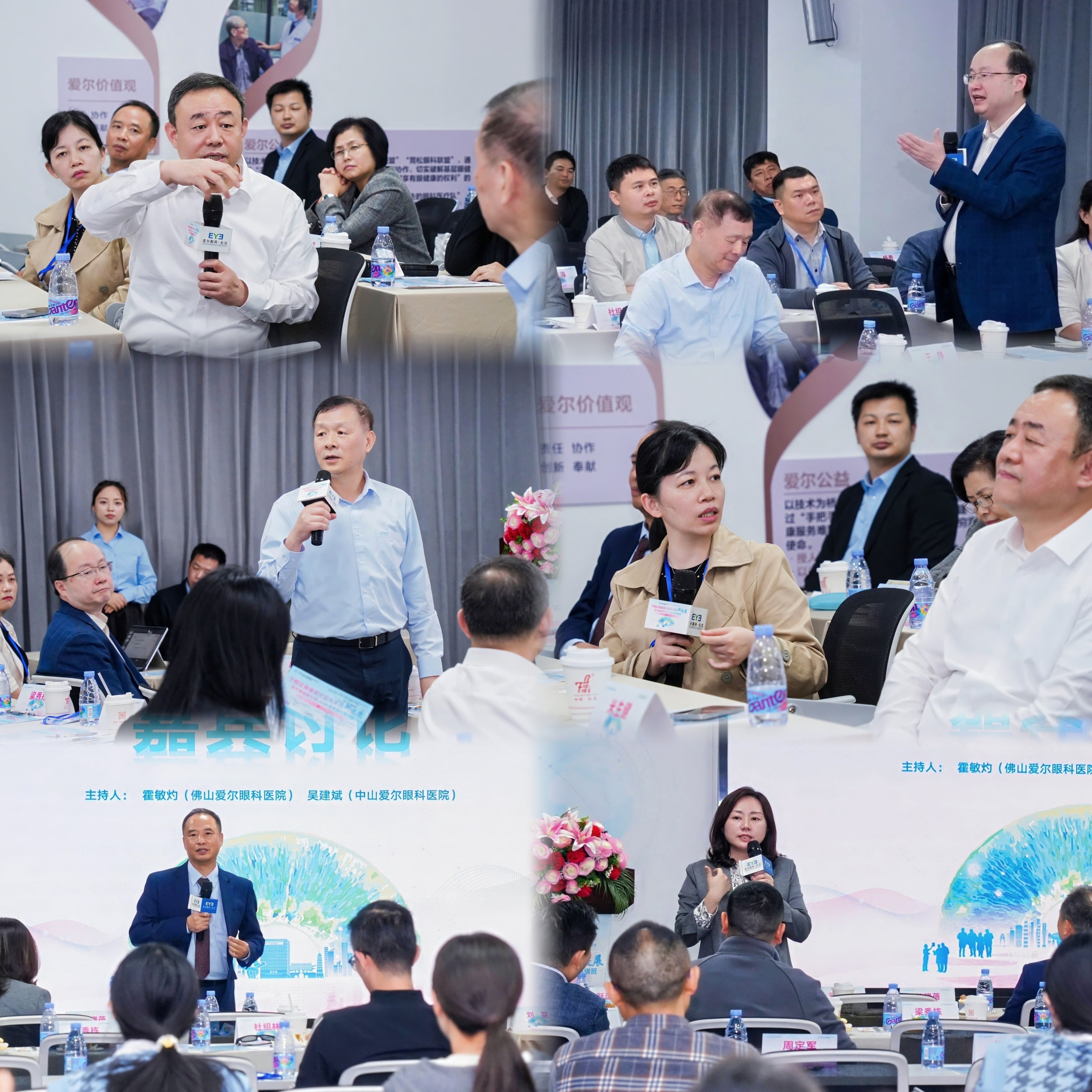
During the discussion session, on-site guests actively shared diverse perspectives, creating a vibrant atmosphere. Professors Wang Zheng, Chen Yueguo, Mi Shengjian, Wu Junshu, President Liu Fei, and Director Chen Xiaobei drew upon their extensive clinical experience and application expertise to engage in multidimensional, comprehensive analysis and exchange. The collision of ideas and sharing of experiences proved deeply inspiring and highly beneficial to fellow professionals in attendance.
Refractive surgery experts including Professor Wang Zheng, Professor Chen Yueguo, Professor Mi Shengjian, and Professor Wu Junshu visited Dongguan Aier Eye Hospital. Accompanied by President Liu Fei and Director Chen Xiaobei, they toured and provided guidance to the refractive surgery specialty department. Both parties engaged in in-depth discussions on topics such as enhancing service standards and optimizing diagnostic and treatment experiences. The expert panel highly commended and fully affirmed our hospital's achievements in promoting and clinically applying myopia surgery techniques.
This forum not only focuses on theoretical frontiers but also emphasizes practical application. Specially designed sessions such as SightMap device operation drills, animal eye practice, and live surgery observation provide participants with invaluable hands-on opportunities. Under the guidance of the expert team from Dongguan Aier Eye Hospital, trainees gain firsthand experience through practical exercises and detailed observation, seamlessly integrating classroom theory with real-world operating room procedures. This approach effectively promotes standardized mastery of new technologies.
During the Longjing Animal Eye Practice session, participants learned Longjing® PR intraocular lens implantation techniques through hands-on practice on animal eyes. They actively engaged in surgical workflow simulations, mastering instrument usage and core procedural techniques.
Many colleagues gathered in the refractive surgery examination room on the 3rd floor to participate in the “SignMap Device Operation and Design Plan” hands-on session, where Dr. Sun Xiaoxue explained the characteristics and operational essentials of the all-light sculpting technology.
On the 8th floor Academic Exchange Hall, participants intently observed the entire myopia correction surgery performed by Director Chen Xiaobei, with Deputy Director Yin Na providing surgical commentary, deepening their appreciation for the artistry of refractive surgery.
Anchored in the Bay Area, Driving High-Quality Regional Ophthalmic Development
As the host of this forum, Dongguan Aier Eye Hospital fully leveraged its role as a regional technological hub. The successful event attracted enthusiastic participation from ophthalmology colleagues across the Greater Bay Area. Through in-depth cross-regional exchanges and learning, it tangibly contributed to enhancing refractive surgery diagnostic and treatment standards locally and in surrounding areas.
Moving forward, Dongguan Aier Eye Hospital will continue to uphold its mission of “enabling patients to access global expertise without leaving home.” The hospital will persist in synchronizing with cutting-edge global technologies and continuously optimizing its “comprehensive refractive surgery solutions” to deliver safer, more precise, and higher-quality medical services. Concurrently, the hospital remains committed to building high-level academic platforms, fostering regional talent development and technological innovation in ophthalmology, and enabling more patients to enjoy the clear vision brought by premium myopia correction surgery.

咨询电话:
0769-22660023
医院地址:
东莞市东城区莞樟路石井路段171号-东莞爱尔眼科医院