Dongguan Aier Eye Hospital: One City, Three Hospitals and One Clinic, Part of a Global Network
 0769-22660023 0769-22660023
Recruitment season is here! The enlistment channel for male recruits is now open! For those dreaming of a military career but currently unable to meet the vision standards due to myopia, take note! Don't forget to plan ahead for vision correction surgery~~
The Summary of the Physical Examination Standards for Enlisting Citizens states: Individuals who have undergone refractive laser surgery (excluding other procedures such as intraocular lens implantation) for over six months, with no complications, and whose uncorrected visual acuity in either eye reaches 4.8, along with a normal fundus examination, are eligible for enlistment except for specialized roles.
In other words, those aspiring to pursue a military career can still achieve their dream even if they currently fail to meet the vision standards, by undergoing excimer laser surgery for correction.
1. How to scientifically plan the timing of refractive surgery?
The Summary of the Physical Examination Standards for Enlisting Citizens explicitly states that individuals who have undergone refractive laser surgery (excluding other procedures such as intraocular lens implantation) must wait at least six months before participating in the military recruitment physical examination.
This means that only those who undergo excimer laser surgery, SMILE, LASIK, or all-laser refractive procedures within six months prior to the physical examination and achieve the required vision standards will be deemed qualified.
In other words, those aspiring to a military career can still achieve their dream even if they currently fail to meet the vision standards, by undergoing excimer laser surgery for correction.
1. How to scientifically plan the timing of refractive surgery?
The Summary of the Physical Examination Standards for Enlisted Citizens explicitly states that individuals must wait at least six months after undergoing excimer laser surgery for refractive errors (excluding other procedures such as intraocular lens implantation) before participating in the military recruitment physical examination.
This means that only those who undergo excimer laser surgery (including SMILE, SMEKTIC, and all-laser refractive procedures) at least six months prior to the physical and achieve the required visual acuity standards will be deemed qualified.
A scientifically sound timeline for refractive surgery planning is as follows:
2. Why is a six-month waiting period required after refractive surgery?
Visual stability requires time.
Typically, ideal or near-ideal corrected vision is achieved shortly after surgery. However, visual quality assessment encompasses multiple factors beyond Snellen chart measurements—including night vision and object clarity—whose recovery requires time. Minor post-operative vision fluctuations are normal and gradually resolve over time.
Generally, stable vision takes 3 to 6 months to achieve. This process does not interfere with daily work or life activities. Of course, whether or not you've undergone refractive surgery, maintaining healthy eye habits remains crucial.
In other words, those aspiring to a military career can still achieve their dream even if they currently fail to meet the vision standards, by undergoing excimer laser surgery for correction.
1. How to scientifically plan the timing of refractive surgery?
The Summary of the Physical Examination Standards for Enlisted Citizens explicitly states that individuals must wait at least six months after undergoing excimer laser surgery for refractive errors (excluding other procedures such as intraocular lens implantation) before participating in the military recruitment physical examination.
This means that only those who undergo excimer laser surgery (including SMILE, SMEK, and all-laser refractive procedures) at least six months prior to the physical and achieve the required visual acuity standards will be deemed eligible.
A scientifically sound timeline for refractive surgery planning is as follows:
2. Why is a minimum six-month waiting period required after refractive surgery?
Visual stability requires time
Typically, ideal corrected vision is achieved or approached shortly after surgery. However, beyond the data measured on an eye chart, visual quality assessment includes multiple indicators such as night vision and clarity of objects, and the recovery of these indicators requires a certain amount of time. Minor fluctuations in vision during the postoperative period are normal reactions and will gradually disappear over time.
Generally, stable vision takes 3 to 6 months to achieve. This process does not interfere with daily work or visual activities. Of course, regardless of whether you've undergone refractive surgery, maintaining healthy eye habits remains crucial.
Corneal Recovery Timeline
Refractive surgeries vary significantly in type and technique, leading to notable differences in recovery periods. For refractive corneal surgery, laser technology is typically used to precisely reshape corneal tissue to correct vision. Within 7 days post-surgery, the corneal wound or incision usually closes; by 1 month post-surgery, corneal repair is largely complete; and between 3 to 6 months post-surgery, the cornea restores its normal biological properties while the corrected vision gradually stabilizes.
3. Which procedure is more suitable for military recruits?
Military recruits and civil service candidates face relatively high vision requirements, demanding not only meeting uncorrected visual acuity standards but also ensuring ocular health can withstand future high-intensity occupational demands. When considering refractive surgery to embark on a military career, it is essential to first understand the distinct characteristics of different surgical methods.
SMILE (Small Incision Lenticule Extraction)
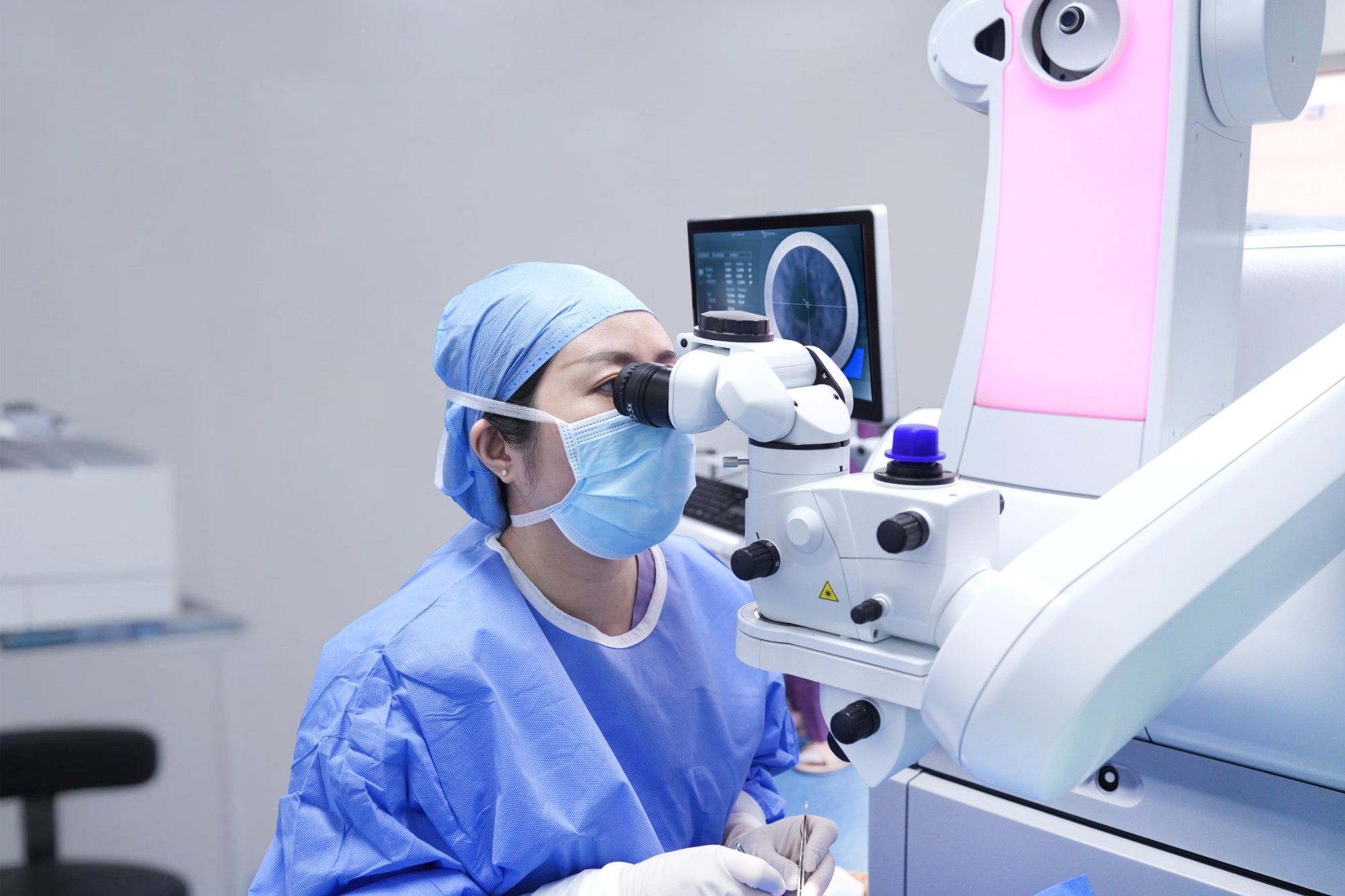
This technique uses a femtosecond laser to create a micro-lenticule within the corneal stroma. This lenticule is then extracted through a 2-4mm incision, altering corneal curvature to correct myopia. Since no corneal flap is created, it offers advantages including minimal corneal damage, enhanced corneal biomechanical stability, and faster recovery.
Currently, the SMILE series comprises three surgical techniques: Minimally Invasive SMILE, Precision SMILE, and Robotic SMILE Pro. Robotic SMILE Pro represents the pinnacle of the SMILE series, serving as an advanced iteration built upon the foundations of Minimally Invasive SMILE and Precision SMILE technologies.

咨询电话:
0769-22660023
医院地址:
东莞市东城区莞樟路石井路段171号-东莞爱尔眼科医院