Dongguan Aier Eye Hospital: One City, Three Hospitals and One Clinic, Part of a Global Network
 0769-22660023 0769-22660023
What is the uvea?
The uvea, also known as the pigmented membrane, resembles purple grapes and forms the second layer of the eyeball wall. It is divided into three parts: the anterior uvea (iris), the middle uvea (ciliary body), and the posterior uvea (choroid).
The uvea possesses high blood flow volume and slow blood velocity, supplying the eye's blood and nutrients. Pathogenic antigens in the blood precipitate here, making it closely linked to systemic diseases and one of the eye's most inflammation-prone areas. Uveitis causes include infection, autoimmune disorders, metabolic disorders, and family history.
Dr. Ouyang Zhenglong kindly reminds: The pathogenesis of uveitis is highly complex, often presenting in a “relapse-remission-relapse” pattern. Each inflammatory episode causes irreversible damage to intraocular tissues and leads to multiple complications, making treatment challenging. Failure to promptly control inflammation and delaying treatment can worsen the condition, leading to complications such as cataracts, glaucoma, macular edema, optic nerve atrophy, and eye atrophy, potentially resulting in permanent blindness.
Intravitreal Injection Center
As a designated tertiary ophthalmic specialty hospital under Dongguan's medical insurance system, our institution actively implements patient-beneficial insurance policies. We currently offer multiple intravitreal injection medications eligible for medical insurance reimbursement. Intravitreal injections are commonly used to treat various eye conditions including age-related macular degeneration, diabetic macular edema, retinal vein occlusion, retinal vasculitis, and uveitis.
Our hospital has established a dedicated “Intravitreal Injection Center” (one-stop vitreous cavity injection facility). Operating under a “day-care treatment” model, we have streamlined and optimized service processes through digital transformation. Injections are typically completed within 24 hours, reducing the number of hospital visits required. This approach saves patients time and treatment costs while fully meeting their demand for convenient, high-quality, and efficient medical services.
Racing Against Time to Safeguard the Lifeline of the Retina
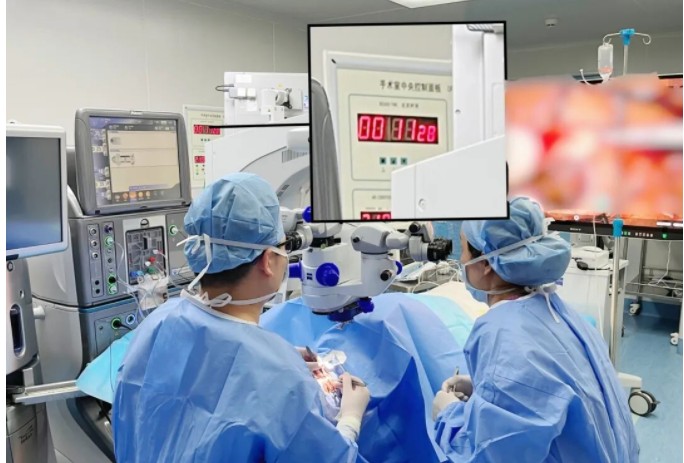
Retinal detachment is an ophthalmic emergency. Every day of delay diminishes the chances of saving vision. That day, Director Wang Hu and Chief Physician Huang Hehua of the Retinal Trauma Department treated multiple such patients, including complex cases with critical conditions—such as retinal detachment caused by severe ocular trauma. Faced with urgent patient needs, the team immediately launched into a series of high-intensity back-to-back surgeries after outpatient hours. From delicate retinal reattachment to clearing hemorrhages in diabetic retinopathy patients, each procedure demanded immense technical skill, physical endurance, and professional dedication. The final surgery concluded successfully late into the night.
“As long as we can help patients, no matter how late it gets, we will persist in treating them,” stated Director Huang Hehua. This embodies the unwavering commitment of Dongguan Aier's Retinal Trauma Department to “putting patient needs first.”
Technology as a Shield: Minimally Invasive Vitrectomy Lifts Patients' Hopes
The department's remarkable ability to perform multiple complex retinal surgeries with such efficiency and precision stems from its significant advantages in vitrectomy techniques:
Precision Technology, Minimized Trauma
The department routinely employs internationally mainstream 25G/27G minimally invasive vitrectomy systems. This technology utilizes finer instrument entry points, significantly reducing ocular trauma during surgery. Patients experience milder postoperative reactions, faster recovery, and greatly enhanced comfort.
High-Speed Precision: Balancing Efficiency and Safety
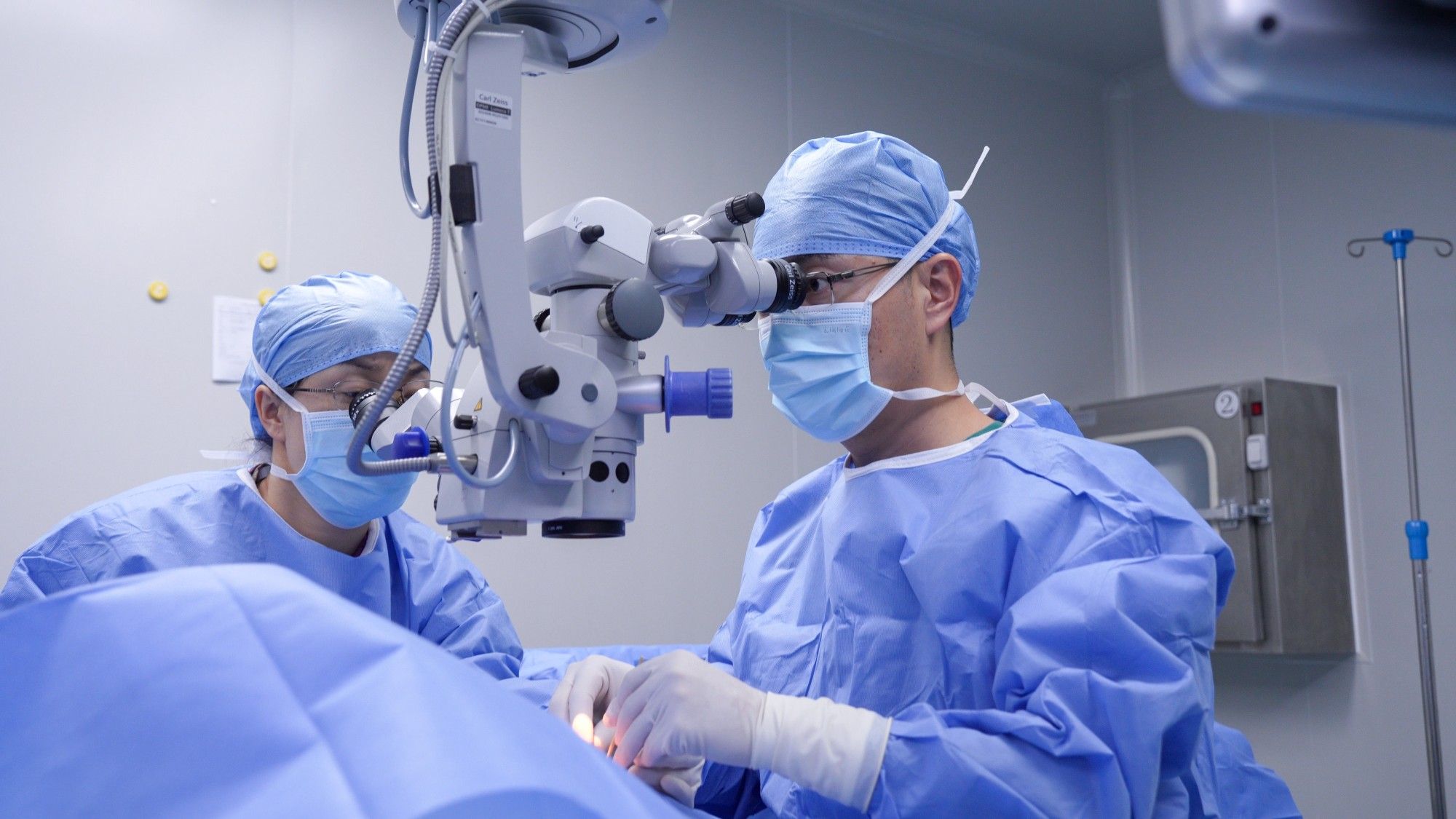
Equipped with imported high-end microscopes integrated with high-speed vitrectomy machines, surgeons gain unparalleled clarity and a stable operating platform. This enables meticulous and efficient handling of delicate retinal tissues, particularly when managing complex proliferative membranes or performing precise hemostasis, maximizing preservation of patients' precious visual function.
Wide-Angle Vision, Conquering Complex Conditions
The advanced non-contact wide-angle observation system grants surgeons a panoramic surgical view. Even severe peripheral retinal lesions or detachments are clearly visualized, ensuring no surgical oversight and substantially boosting success rates for complex, challenging retinal surgeries.
Comprehensive Postoperative Care, Ensuring Safety
The department maintains a comprehensive postoperative management system with 24-hour on-call coverage. This ensures any postoperative complications receive prompt, professional attention, adding a “double safeguard” to surgical outcomes.
Retinal diseases are complex and unpredictable, with lesions often insidious yet dangerous. “Timely intervention and treatment are crucial for saving vision!” stated Director Huang Hehua.
To uphold the principle of “racing against the clock,” Dongguan Aier Eye Hospital has established specialized services including a “24-Hour Retinal Detachment Emergency Green Channel,” an “Ocular Trauma Emergency Green Channel,” and “Nighttime Emergency Services and Surgery.” These initiatives help patients gain precious treatment time, maximizing the potential for favorable visual outcomes.

咨询电话:
0769-22660023
医院地址:
东莞市东城区莞樟路石井路段171号-东莞爱尔眼科医院