Dongguan Aier Eye Hospital: One City, Three Hospitals and One Clinic, Part of a Global Network
 0769-22660023 0769-22660023
Recently, the Dongguan Aier Eye Hospital’s 24‑hour service hotline received a heartwarming call of gratitude. Ms. Lu (pseudonym), a citizen, spoke with sincere appreciation—not to inquire about medical matters, but to specifically commend the hospital’s optometrist, Long Li.

“Please be sure to pass on my thanks to Long Li. She is so professional and so responsible!” To fully express her gratitude, Ms. Lu later made a special trip to the hospital to personally thank the chief duty officer, praising the hospital’s expert care and thoughtful service.
The story began when Ms. Lu’s six‑year‑old daughter, Xiao Lin (pseudonym), underwent a school vision screening. The screening detected abnormal vision, and a subsequent visit to a nearby hospital led to a diagnosis of “suspected amblyopia.” This result plunged the entire family into anxiety. However, based on her daily observations of her daughter’s visual habits, Ms. Lu had lingering doubts about the diagnosis and was reluctant to accept a definitive conclusion for her child’s eye health.
Acting on enthusiastic recommendations from friends and relatives, and seeking an authoritative and precise eye examination, Ms. Lu brought her daughter to Dongguan Aier Eye Hospital, hoping to rely on a standardized medical refraction to re‑evaluate and confirm the condition.
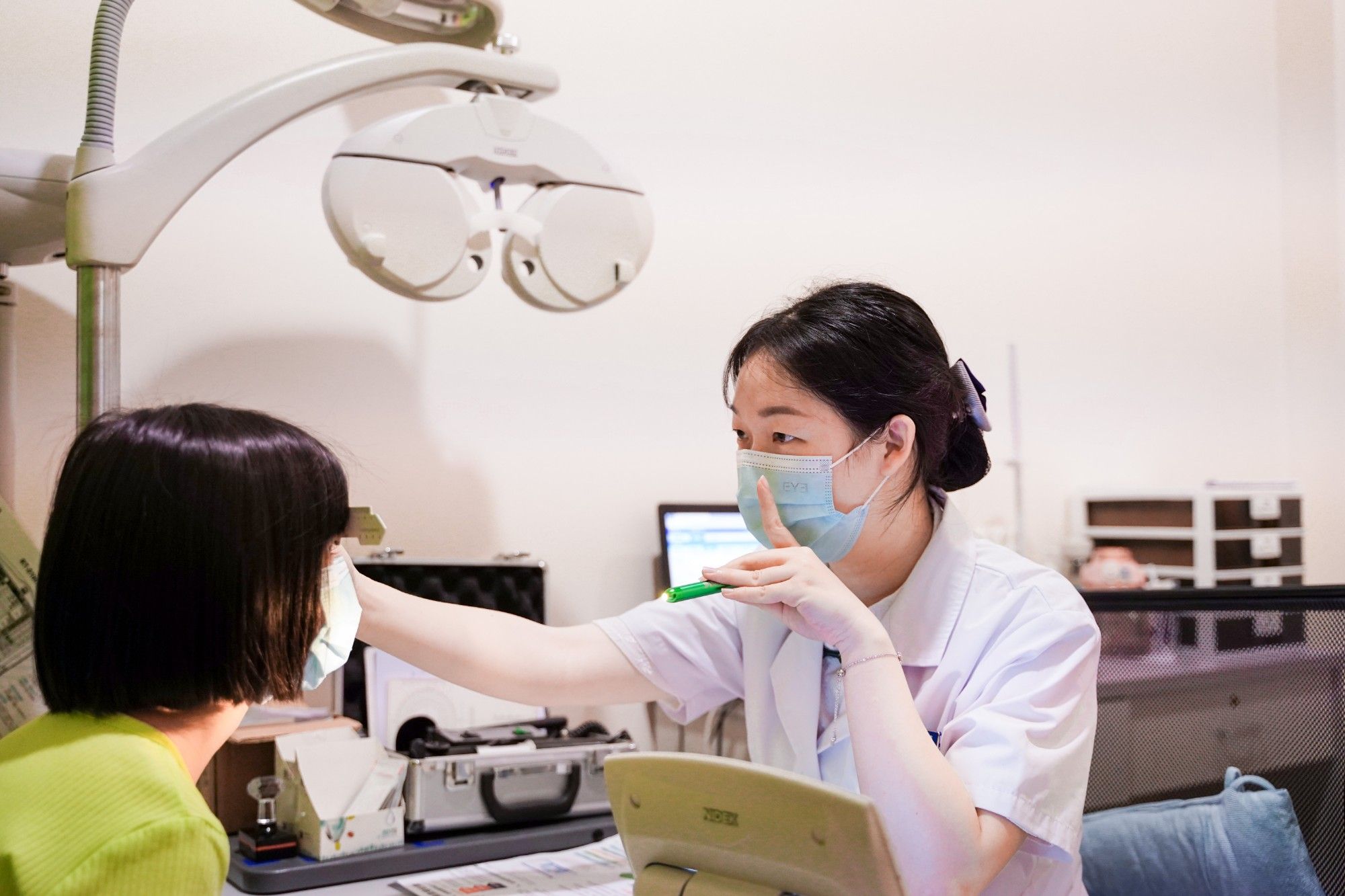
On the day of the visit, Long Li, an optometrist in the hospital’s Department of Optometry and Pediatric Ophthalmology, performed a complete set of standardized medical refraction tests for Xiao Lin. Young children, whose mental and emotional maturity is still developing, often feel nervous and resistant during professional eye exams, leading to poor cooperation—a key reason why vision tests in children can be prone to errors.
At the start of the examination, Xiao Lin kept saying she could not see the optotypes clearly with her right eye. Under routine screening, this could easily have been directly interpreted as visual impairment. But based on her solid clinical experience and the data from the auto‑refractor, Long Li determined that all indicators did not match the characteristics of amblyopia. The issue was not a pathological condition of the eye, but rather the child’s young age, nervousness, and inability to cooperate precisely with the test.
Therefore, Long Li did not rush to a conclusion. Instead, she patiently guided and gently encouraged the child throughout the process, step by step helping Xiao Lin carefully identify the optotypes. Whenever the child pointed out the correct symbol, Long Li promptly praised her, gradually easing Xiao Lin’s tension and building her confidence. Thanks to this patient reassurance and professional guidance, Xiao Lin quickly adjusted her state. The subsequent examination of her left eye went very smoothly, with the child clearly identifying the 1.0 optotype and showing greatly improved cooperation throughout.
“I was standing right beside them, watching. Dr. Long was extremely meticulous—she even noticed a thin layer of fog on the trial lens caused by temperature differences, stopped immediately to wipe it clean, and made sure it didn’t affect the readings,” Ms. Lu recalled. Compared to the brief, hurried examination at the previous hospital that took just a few minutes, the refined attention to every diagnostic detail at Aier Eye Hospital left a deep impression on her.
Based on comprehensive assessments including axial length measurement, refraction testing, and visual function evaluation, the final results definitively overturned the previous misdiagnosis: Xiao Lin’s ocular development was in good condition, with no myopia, astigmatism, or amblyopia. The earlier suspicion of amblyopia was determined to be a misjudgment caused by the limitations of the screening method and the child’s poor cooperation during testing.
The accurate diagnostic report completely lifted the heavy burden that had weighed on Ms. Lu’s mind for days. After the consultation, Long Li also thoughtfully explained the essential differences between routine school vision screenings and professional medical refractions, and provided detailed guidance on daily eye care for children, comprehensively addressing the mother’s concerns about eye health.
From the anxiety of a misdiagnosis to the relief of knowing the truth, Ms. Lu was deeply moved by Long Li’s rigorous and meticulous professionalism and her solid clinical expertise. She first called the hospital hotline to express her thanks, and then made a special visit to personally deliver her gratitude. “From now on, for all my child’s vision check‑ups, I will only trust Dongguan Aier Eye Hospital,” Ms. Lu affirmed.
Committed to the field of children’s and adolescents’ eye health, Dongguan Aier Eye Hospital consistently upholds its founding principle of professional excellence and humanistic care. The hospital strictly implements standardized medical refraction protocols, using meticulous and thorough examination processes to minimize the risk of misdiagnosis or missed diagnosis. At the same time, it integrates warm patient education and attentive companionship into every step of care, building a strong defense against myopia in young people with professional expertise, while warming every patient’s heart with compassionate service—continuously safeguarding the eye health of the community it serves.

咨询电话:
0769-22660023
医院地址:
东莞市东城区莞樟路石井路段171号-东莞爱尔眼科医院