Dongguan Aier Eye Hospital: One City, Three Hospitals and One Clinic, Part of a Global Network
 0769-22660023 0769-22660023
“Cut back on TV—it's bad for your eyes!”
“Then should I do my homework?”
“...Homework strains your eyes too!”
Many families have had this conversation. So the question arises: Which is worse for children's eyes—watching TV or doing homework?
Here's the answer: Homework!
The reason is simple: Homework involves “close-up, active eye use.” Eyes must continuously “strain to focus,” and when combined with common issues like poor posture and inadequate lighting, the ciliary muscles (easily) become chronically tense. Watching TV, however, is “distant, passive eye use.” It places less strain on the eyes' focusing ability, with the main harm stemming from uncontrolled viewing duration.
Of course, discussing “harm” without considering “screen time” is meaningless. But parents must understand the harm mechanisms and risk factors of both activities!
First, let's do the math on eye strain:
The damage mechanisms differ significantly between the two.
Assessing eye damage hinges on three key factors: distance, accommodation burden, and viewing rhythm—the primary causes of myopia in adolescents.
Watching TV: “Passive viewing at a distance,” where harm lies in “prolonged screen time”
TV screens emit light as a “luminous source.” The recommended viewing distance is typically 2-3 meters (adjusted based on screen size). At this distance, the ciliary muscles remain relatively relaxed, theoretically requiring less effort than close-up viewing. However, risks stem from three key factors:
Blue light stimulation: Short-wavelength blue light emitted by TV screens penetrates the lens directly to the retina. Prolonged overexposure may damage retinal pigment epithelial cells, increasing the risk of macular degeneration. This harm doubles when watching TV in the dark, where the screen's brightness contrasts sharply with ambient light.
Reduced Blinking: While people typically blink 15-20 times per minute, intense concentration while watching TV can drastically reduce this to 5-8 times. This decrease in blink rate slows tear production and accelerates evaporation, potentially triggering dry eye syndrome with symptoms like dryness, foreign body sensation, and blurred vision.
Addiction leads to uncontrolled viewing time (prone to eye strain): Maintaining the same posture while staring at a screen for extended periods causes eye fatigue due to sustained effort, even at appropriate viewing distances.
Homework: “Close-up active eye use” causes harm through “accommodative stress.”
The light emitted by television screens is classified as a “luminous source.” The recommended viewing distance is typically 2-3 meters (adjusted based on screen size). At this distance, the ciliary muscles of the eyes remain relatively relaxed, theoretically reducing eye strain compared to close-up viewing. However, risks are concentrated in the following three areas:
Blue light stimulation: Short-wavelength blue light emitted by TV screens penetrates the lens directly to the retina. Prolonged overexposure may damage retinal pigment epithelial cells, increasing the risk of macular degeneration. This harm doubles at night when watching TV in the dark, as the stark contrast between screen brightness and ambient light intensifies blue light damage.
Reduced Blinking: While people typically blink 15-20 times per minute, intense concentration while watching TV can drastically reduce this to 5-8 times. This decrease in blink rate slows tear production and accelerates evaporation, potentially triggering dry eye syndrome with symptoms like dryness, foreign body sensation, and blurred vision.
Addiction leads to uncontrolled viewing time (prone to eye strain): Maintaining the same posture while staring at a screen for extended periods causes eye fatigue due to sustained effort, even at appropriate distances.
Homework: “Close-range active eye use” harms eyes through “accommodative stress”
Image
When doing homework, the distance between eyes and books is typically 30-40 cm, constituting classic “close-range visual activity.” During this time, the ciliary muscles must continuously contract, causing the lens to become more convex to focus on nearby objects. Prolonged tension in these muscles can easily trigger “ciliary spasm,” one of the primary causes of myopia in adolescents. Key risks include:
Excessive Accommodative Burden: The accommodative capacity of children and adolescents' ciliary muscles is still developing. Prolonged, continuous near-distance work keeps these muscles constantly tense and unable to relax, leading to diminished accommodative function. This manifests as blurred distance vision. Without timely intervention, pseudomyopia may progress to true myopia.
Poor posture and lighting: Many children unconsciously hunch over or tilt their heads downward while doing homework, reducing the distance between their eyes and books to less than 20 centimeters. This further increases the strain on the eyes. Additionally, lighting that is too dim or too bright forces the eyes to work extra hard to adapt, accelerating fatigue.
Monotonous Visual Rhythm: Homework requires sustained focus on static text, limiting eye movement and fixing accommodation frequency without opportunities for distant relaxation. Unlike dynamic visual changes during TV viewing, static close-up tasks more readily cause the ciliary muscle to become “stiff.”
New Year's Eye Care Guide:
Balance Learning and Entertainment to Protect Your Child's Eyes
Whether doing homework or watching TV, the key lies in “limiting screen time and using proper methods.” Parents should save this practical guide for future reference!
【4 Key Tips for Eye Protection While Watching TV】
1. Maintain a “Safe Distance”: While the typical TV viewing distance is 2–3 meters, this is farther than reading or homework. However, due to the larger screen size, it still places significant strain on the eyes. The optimal viewing distance should be 4–5 meters, adjusted according to the TV size.
2. Set “Viewing Time Slots”: Limit total daily TV time to under 1 hour, spread across 2-3 sessions of no more than 30 minutes each. Avoid TV during meals and 1 hour before bedtime.
3. Adjust “Screen Settings”: Set brightness to “clear visibility without glare during daytime, matching ambient light at night”; adjust contrast to “distinguish facial features clearly without overexposing backgrounds.”
4. Incorporate “Interactive Breaks”: Pause cartoons or documentaries every 10 minutes to discuss the plot with your child, prompting them to blink and look into the distance to prevent passive immersion.
【5-Step Eye Protection for Homework】
1. Follow the “20-20-20” rule: After every 20 minutes of study, look 20 feet (about 6 meters) away for 20 seconds to relax the eyes.
2. Maintain proper reading and writing posture: Keep your back straight, position books or screens 30–40 cm from your eyes, and avoid prolonged downward head tilting.
3. Limit prolonged close-up tasks: Minors should not engage in close-up activities for more than 4 hours daily, avoiding extended continuous use. Manage screen time wisely: Limit daily screen time to under 1 hour (ideally under 30 minutes), with sessions capped at 20 minutes. Use larger screens with appropriate brightness and contrast settings.
4. Ensure Adequate Indoor Lighting
5. Utilize Smart Tools to Manage Children's Eye Habits
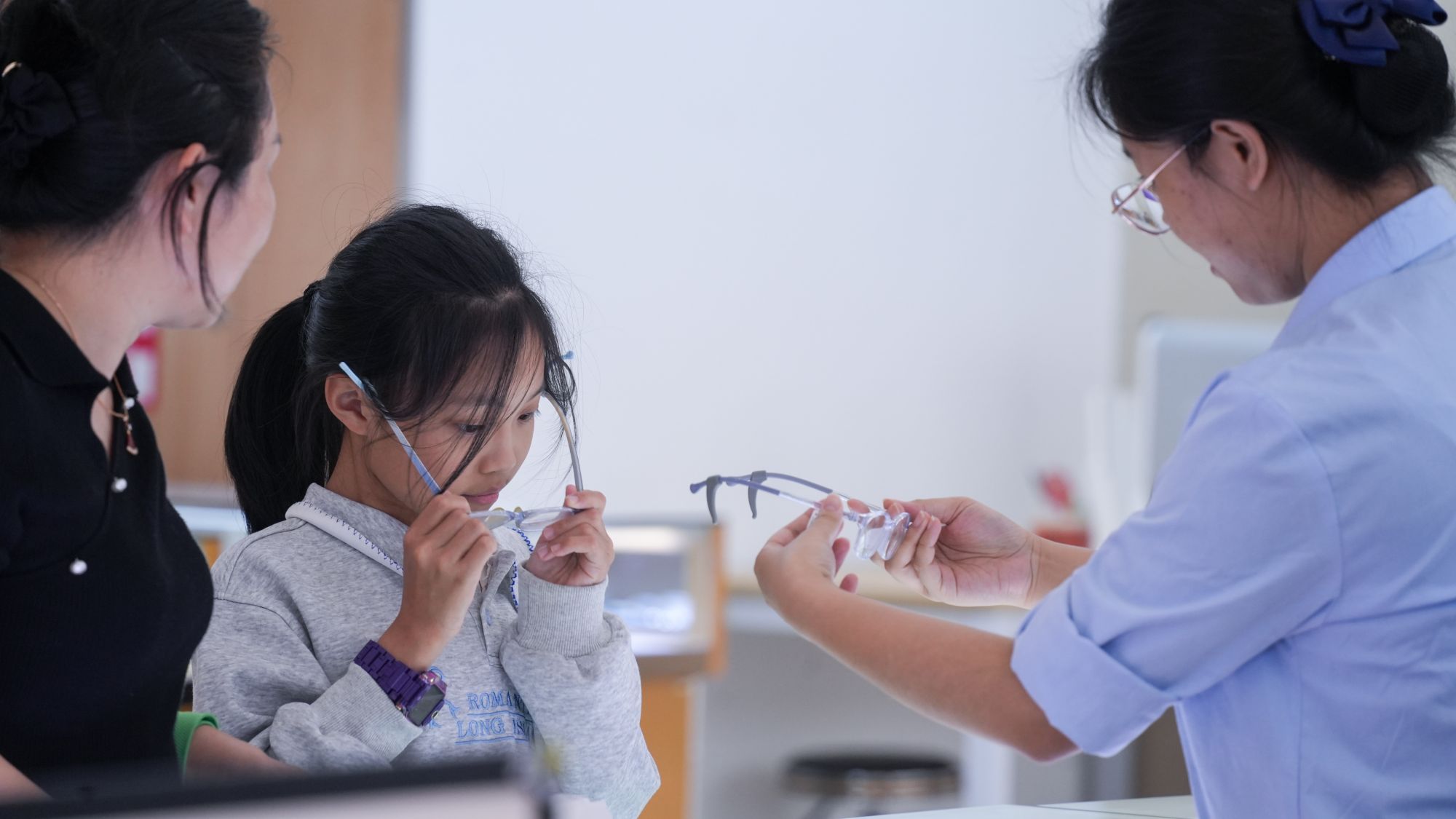
Several smart solutions are available to help parents manage children's eye habits, such as smart hardware interventions, intelligent learning devices, and the “Little Green Sunflower” smart glasses for children's vision management. Notably, the “Xiao Qing Kui” glasses feature a Cloud Clip smart frame that monitors viewing distance, duration, angle, light intensity, and outdoor exposure time in real time. Should improper eye usage occur, the Cloud Clip vibrates to alert the child, helping them develop healthy habits. Parents can also access monitoring data anytime through the smart app.
Real-time Monitoring:
Five-dimensional data collection (viewing distance/duration/angle/light intensity/outdoor exposure time) with vibration alerts;
Immediate feedback upon improper usage. Optical Protection: Central plano zone (11mm high-definition field of view), 540 microlens array (creating peripheral defocus signals);
Data Management: Daily eye usage reports generated, personalized improvement recommendations pushed.
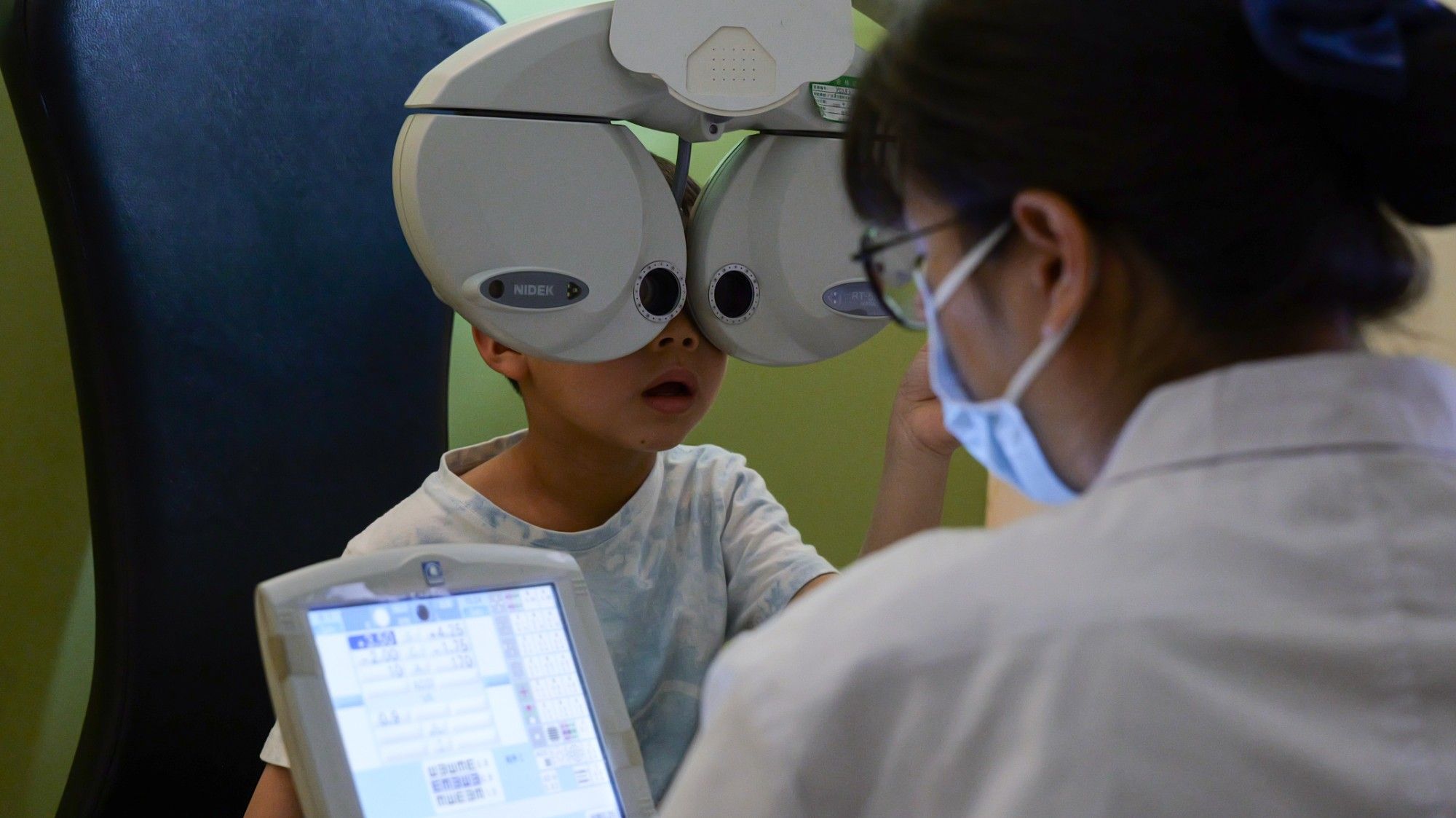
Dongguan Aier Eye Hospital reminds parents that children's eye development requires a balance of activity and rest. If your child frequently rubs their eyes, blinks excessively, experiences dryness, or has blurred distance vision, promptly bring them to a professional ophthalmic institution for examination. Early detection and intervention are crucial to safeguarding vision during this critical developmental period!

咨询电话:
0769-22660023
医院地址:
东莞市东城区莞樟路石井路段171号-东莞爱尔眼科医院