Dongguan Aier Eye Hospital: One City, Three Hospitals and One Clinic, Part of a Global Network
 0769-22660023 0769-22660023
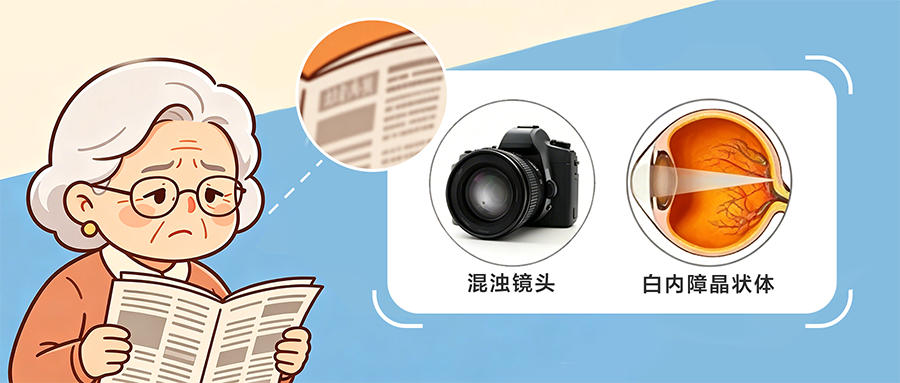
Cataracts, the leading cause of blindness in China, leave many middle-aged and elderly people struggling to see clearly. Surgery is currently the only effective way to cure cataracts.
The core of the procedure involves removing the cloudy natural lens and implanting a precision-engineered artificial lens. This “invisible lens,” as thin as a cicada’s wing, will directly determine the quality of vision after surgery.
Faced with the vast array of intraocular lenses available on the market, many patients easily find themselves overwhelmed by “choice paralysis.” Monofocal, multifocal, astigmatism-correcting… Prices vary across different lenses, but is the most expensive option necessarily the best fit?
Today, we’ll break it all down to help you find the clearest solution tailored just for you.
Expert for This Issue: Tan Yongchang
Director of the Cataract Department at Dongguan Aier Eye Hospital, Associate Chief Physician, Member of the Communist Party of China
Member of the Cataract and Refractive Surgery Committee, Guangdong Eye Health Association
CCOE Instructor, Guangdong Province
Member of the Refractive Cataract Committee, Guangdong Optometry Society
Member of the Perioperative Management Committee, Guangdong Optometry Society
Cataract Surgery Instructor for Aier Group’s Guangdong Region
Member of the Guangdong Cataract Committee, Aier Eye Hospital Group
Johnson & Johnson Vision Care · Refractive Cataract Planning Master
Johnson & Johnson Vision Care National Expert in Refractive Cataract Surgery
Alcon Education Institute Trainer in Communication Skills for Intraocular Lens Implantation (Nationwide)
Zeiss Abbe Lecturer (Nationwide)
Areas of Expertise
With nearly 20 years of dedicated focus on cataract diagnosis and treatment, he has performed over 20,000 phacoemulsification cataract surgeries. His team has performed more than 3,500 femtosecond laser cataract surgeries, making him a leader in the field of refractive cataract surgery in Dongguan. Proficient in femtosecond laser cataract surgery and 3D-guided precision surgery, he is also among the first experts to adopt multiple high-end imported intraocular lenses. Leveraging cutting-edge technology and extensive experience, he tailors high-definition, comfortable, and long-lasting postoperative vision solutions for patients, illuminating clear vision in their later years through professional expertise.
Common Intraocular Lenses
Currently, mainstream intraocular lenses differ in their “areas of expertise”:
01 Monofocal Intraocular Lenses: The Value Choice
This is the most common type, offering an affordable option. It has only one focal point, allowing you to either “see clearly at a distance” (such as viewing landscapes or watching TV) or “see clearly up close” (such as reading books or using a smartphone). If you choose clear distance vision, you’ll need to wear reading glasses for close-up tasks; if you choose clear near vision, you’ll need to wear glasses for distance vision.
This type of lens is suitable for older patients who don’t read much, have modest visual quality requirements, and prioritize “stability and safety.” However, it’s important to discuss your needs thoroughly with your doctor before surgery to avoid post-operative disappointment from having to wear glasses again.
02 Bifocal Intraocular Lenses: An Alternative for Those Wanting to Avoid Reading Glasses
These lenses create two focal points, providing both distance and near vision. For example, you can clearly see road signs from a distance and read text messages on your phone up close, significantly reducing your reliance on reading glasses. However, they do have a minor drawback: vision at intermediate distances (such as when using a computer or chopping vegetables) may be slightly impaired.
Suitable for teachers, business professionals, and others who frequently need to read documents or use their phones while also needing to see things in the distance. However, please note that if you have conditions such as macular degeneration, this option may not be suitable.
03 Trifocal Intraocular Lenses: The Choice for “All-Day Vision”
As a new type of “presbyopia-correcting lens,” it adds an “intermediate focus” to the bifocal design. It effectively covers all three viewing distances—far (driving), intermediate (using a computer), and near (reading a newspaper)—while also reducing glare and improving night vision.
It is suitable for those who want to completely eliminate the need for glasses, spend a lot of time in front of electronic screens, and require precise visual acuity for daily tasks. However, they are relatively expensive and have strict requirements for eye conditions. A comprehensive preoperative examination is necessary for the doctor to assess suitability.
04 Extended Depth of Focus Intraocular Lenses: A Practical Compromise
These lenses focus light onto an expanded plane, providing a wider range of clear vision. They are particularly suitable for intermediate and long-distance activities, such as driving, watching TV, and using a computer. However, for close-up activities like using a smartphone or reading, you may still need to wear glasses. (Some models can correct near vision.)
Its advantages include stability and reduced glare and halos, making it particularly suitable for those who frequently drive at night, primarily use their eyes for intermediate distances in daily life, and do not insist on being “completely glasses-free.” Some continuous vision IOLs also feature a refractive design, offering less discomfort and greater practicality.
05 Astigmatism-Correcting Intraocular Lenses: The “Favorite” of Astigmatism Patients
Astigmatism-correcting lenses can correct astigmatism while treating cataracts, significantly improving uncorrected visual acuity. They can also be combined with bifocal, trifocal, or extended depth-of-focus features to create “multifocal lenses,” helping

咨询电话:
0769-22660023
医院地址:
东莞市东城区莞樟路石井路段171号-东莞爱尔眼科医院