Dongguan Aier Eye Hospital: One City, Three Hospitals and One Clinic, Part of a Global Network
 0769-22660023 0769-22660023
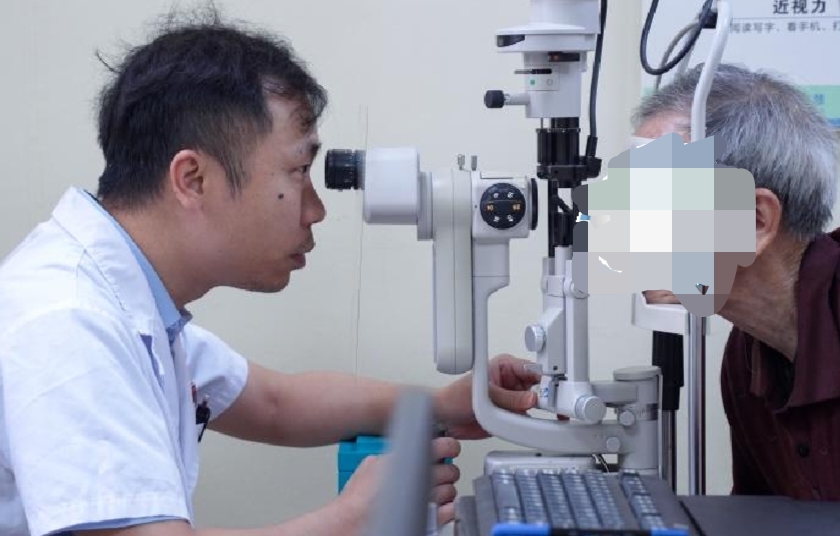
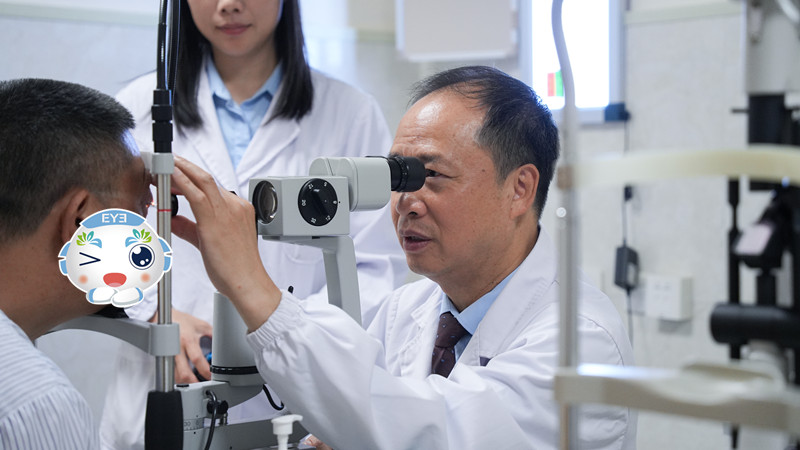
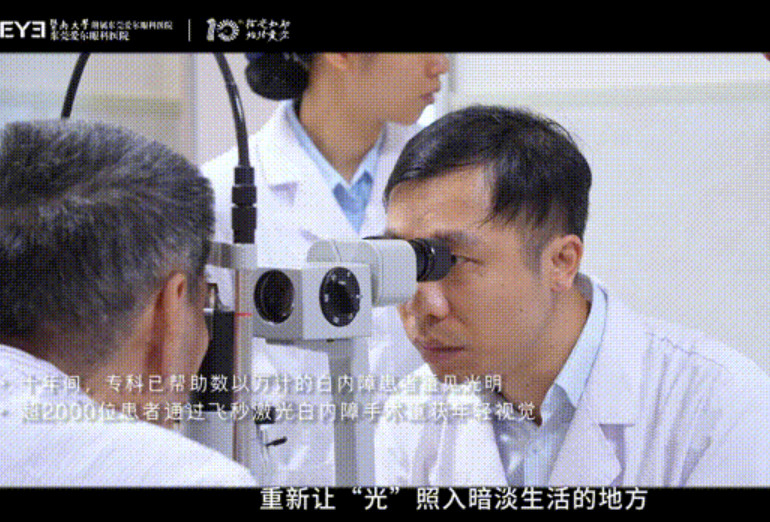
Recently, the team led by Dr. Tan Yongchang of the Cataract Department at Dongguan Aier Eye Hospital successfully performed femtosecond laser cataract surgery on an 83-year-old patient suffering from extreme myopia (1,300 diopters) and grade 5 hypermature nuclear cataracts. The procedure helped the patient regain clear vision from a world of mere light perception and restore confidence in daily life.
Mr. Ye, the patient, has a history of hypertension spanning several decades. He has suffered from ultra-high myopia in both eyes since childhood, with a prescription as high as 1,300 diopters, and has relied on thick glasses for over 70 years. At the age of 45, Mr. Ye was diagnosed with cataracts. However, influenced by the misconception that “cataracts must be allowed to fully mature until vision is so poor that one cannot see one’s hand in front of one’s face before surgery can be performed,” and driven by a fear of the procedure, he repeatedly postponed treatment, enduring blurred vision for nearly 40 years.
Following a comprehensive and systematic examination by Dr. Tan Yongchang, it was found that Mr. Ye’s uncorrected visual acuity in both eyes was only 0.02; he could not distinguish human figures or the outlines of objects in front of him. The lenses in both eyes had developed into Grade 5 black nuclei (extremely hard nuclei) and were in the overripe stage. Additionally, he suffered from bilateral high-myopia-related choroidal and retinal lesions, as well as high-myopia-associated cataracts, presenting extremely complex ocular conditions.
Tan Yongchang explained that Grade 5 hard cataracts are as hard as stone and require high energy to fragment, making them highly prone to damaging the corneal endothelium. The patient’s extreme myopia of 1,300 diopters had caused significant elongation of the axial length and structural abnormalities in the eyeball, resulting in thin and fragile retinas and capsulae, as well as lax suspensory ligaments. This presented multiple high-risk complications during surgery, including retinal detachment, capsular rupture, and lens dislocation. Compounded by advanced age, a history of hypertension, and high-myopia-related choroidoretinopathy, the patient’s poor fundus conditions demanded extremely high precision in intraocular lens calculation and implantation, posing a severe challenge to surgical control and safety.
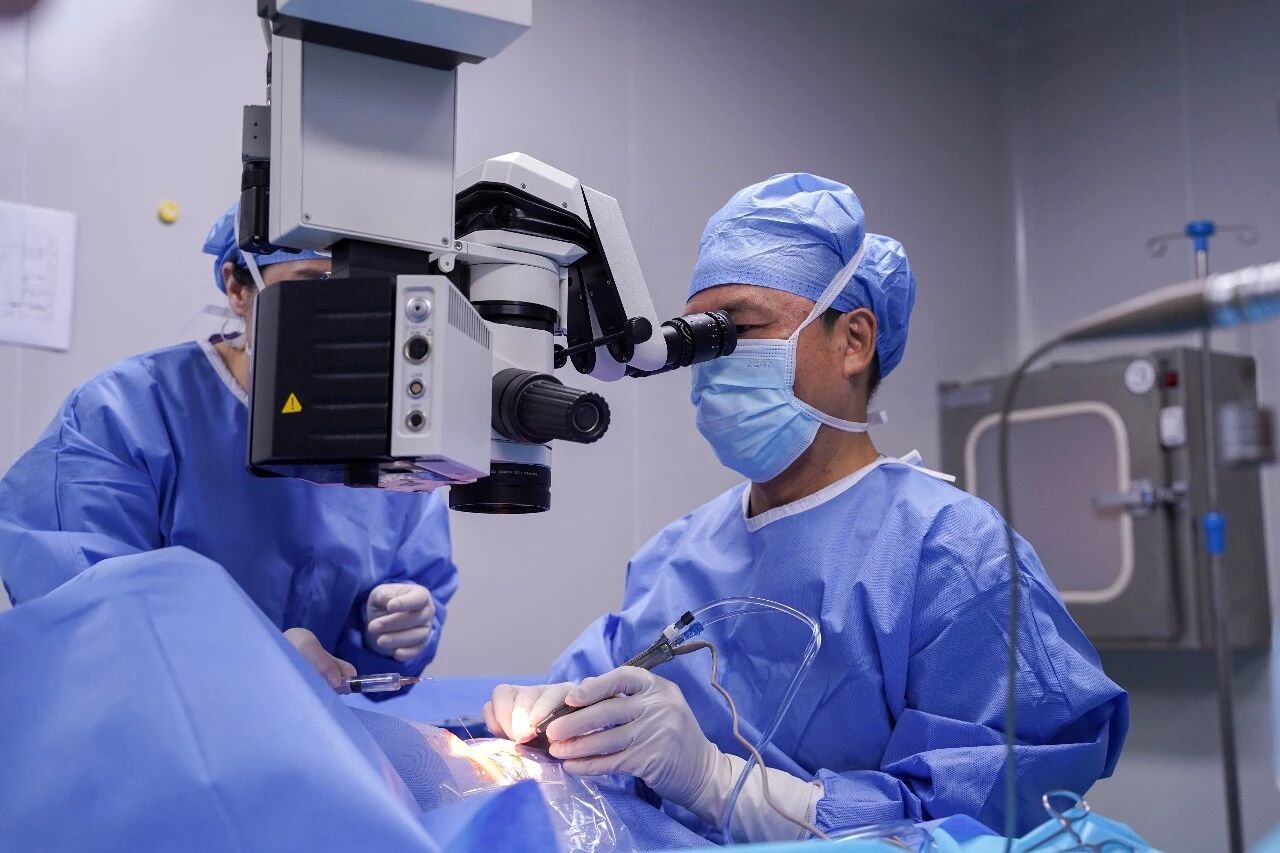
Faced with this highly complex case, Dr. Tan Yongchang’s team conducted a thorough preoperative assessment and tailored a femtosecond laser-assisted phacoemulsification and intraocular lens implantation procedure specifically for Mr. Ye. This technique replaces traditional manual procedures with femtosecond laser technology to precisely perform critical steps such as incision, capsulorhexis, and nucleus fragmentation, thereby minimizing trauma and risk and making it suitable for cases of ultra-high myopia combined with complex cataracts. At the one-week postoperative follow-up, Mr. Ye’s vision in his right eye had improved to 0.6, and he reported clear and bright vision.
Tan Yongchang cautioned that individuals with high myopia are more prone to cataracts and retinal diseases. Such secondary cataracts tend to develop early and progress rapidly; therefore, patients should not wait until the cataract is fully matured before undergoing surgery. Instead, they should seek timely treatment as soon as vision is affected to avoid increasing risks and triggering complications such as glaucoma.
He recommends that patients with extreme myopia undergo a fundus examination every six months. For patients with comorbidities such as hypertension or diabetes, it is essential to maintain stable control of these underlying conditions to reduce the risk of ocular complications. Femtosecond laser cataract surgery offers high precision, minimal trauma, and superior safety, providing better protection for intraocular tissues and enhancing postoperative visual quality. It is particularly suitable for patients with complex cataracts, including the elderly, those with complex comorbidities, and those with extreme myopia.

咨询电话:
0769-22660023
医院地址:
东莞市东城区莞樟路石井路段171号-东莞爱尔眼科医院